
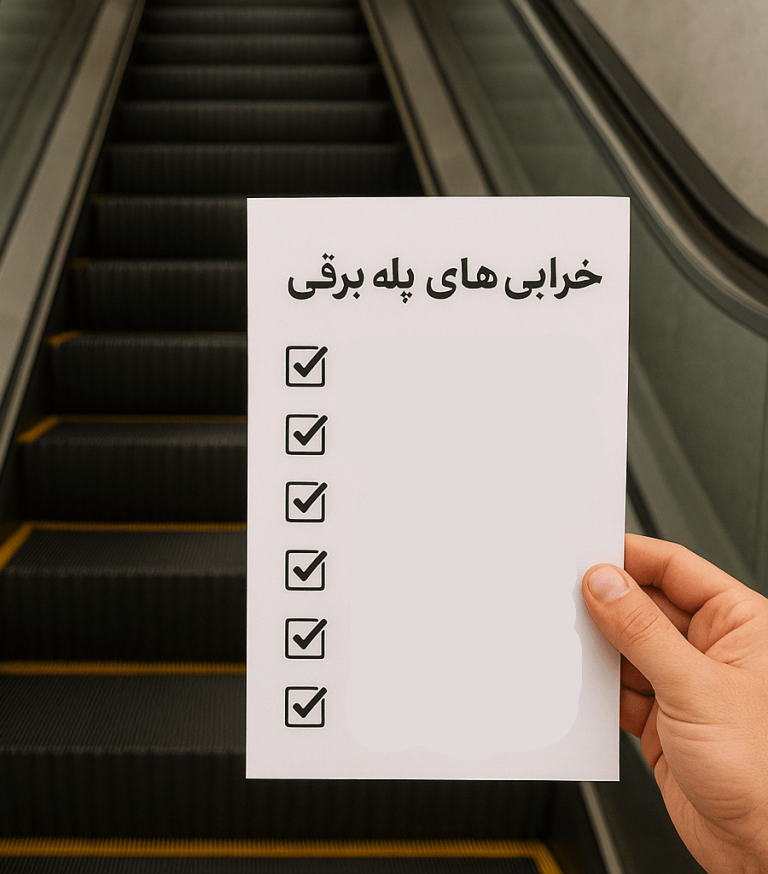
Escalators are one of the most widely used public transportation equipment in shopping malls, subway stations, commercial and office buildings. Due to their continuous operation, escalator breakdowns are very common. Understanding the causes of these breakdowns helps repairmen and owners to fix the problem before it causes an accident.
In this article, we will examine the details of the elevator service checklist in detail.
Common Escalator Failures
1. Sudden Escalator Stop
- One of the most common problems. Causes of sudden stops include:
- Safety systems activated
- Emergency stop sensors
- Foreign objects stuck inside the stairs
- Excessive load on the stairs
2. Unusual noise when moving
If the escalator makes “grunt,” “rattle,” or “whistling” sounds when moving, there is probably a problem.
Reasons:
Bearing failure
Lack of lubrication
Loose belts
Wear of mechanical parts
Solution:
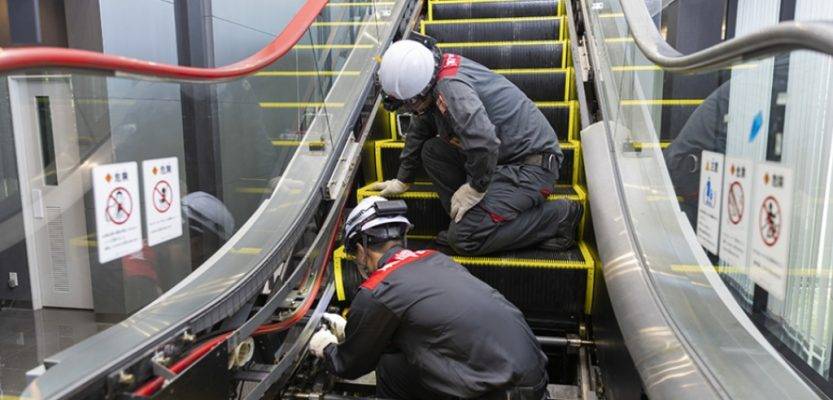
Inspect bearings, grease, adjust belts.
3. Severe escalator vibration
Vibration usually indicates a serious problem.
Causes:
Damaged gears
Motor failure
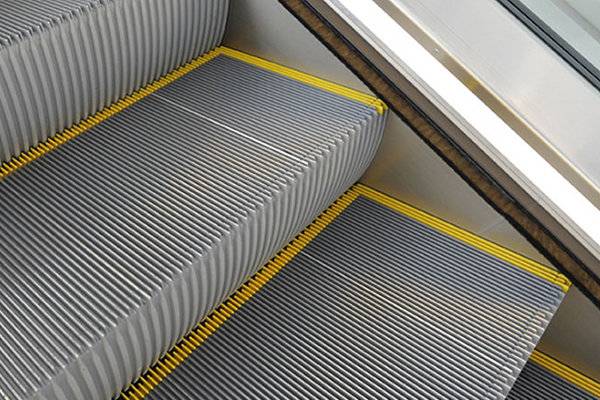
Stairs not level
Loosen structural bolts
Solution:
Adjust system level, check motor, tighten connections.
4. Stairs or railings get stuck
Sometimes the stairs or railing handle will stop moving smoothly.
Reasons:
Foreign objects get stuck
Ripped railing strap
Roller failure
Solution:
Unscrew the stairs and clean, replace the railing strap.
5. Escalator speed reduction
The escalator should have a constant speed; a reduction in speed is a sign of failure.
Reasons:
Weak motor
Worn chains
Insufficient lubrication
Solution:
Check the motor, adjust the chains, lubricate.
6. Failure of the safety system and sensors
Sensors are responsible for emergency stopping in case of danger.
Reasons for failure:
Dust
Damaged cables
Faults in the electrical circuit
Solution:
Periodic cleaning, complete testing of sensors, replacement of defective sensors.
7. Escalator Motor Failure
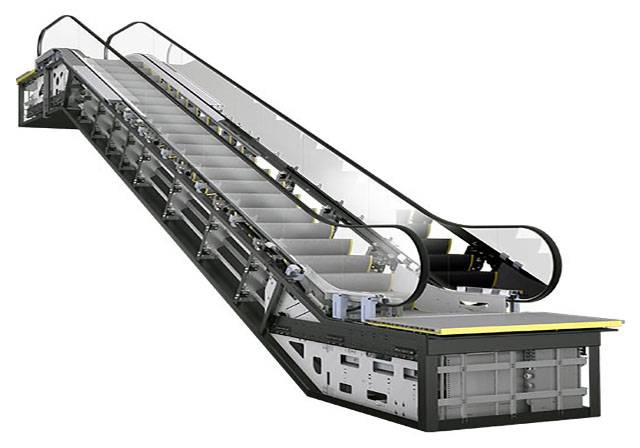
The motor will wear out if it is operated continuously.
Reasons:
Overheating
Excessive pressure
Poor maintenance
Solution:
Periodic inspection of the motor, amp test, replacement of worn parts.
Danger signs that should not be ignored
Loud noise
Frequent stops
Severe vibration
Slow movement
Sticks to stairs or railing
If you notice any of these symptoms, the device should be turned off immediately and checked.
Preventing Escalator Failures
To extend the life of the device:
Regular periodic service
Standard lubrication
Preventing the entry of foreign objects
Educating users (e.g. prohibiting sitting on the stairs)
Monthly inspection of the motor, chain and moving parts
Conclusion
Escalators are sensitive and highly used devices, and their breakdowns can be dangerous. By understanding the most common problems and regular servicing, downtime and high costs can be avoided.