
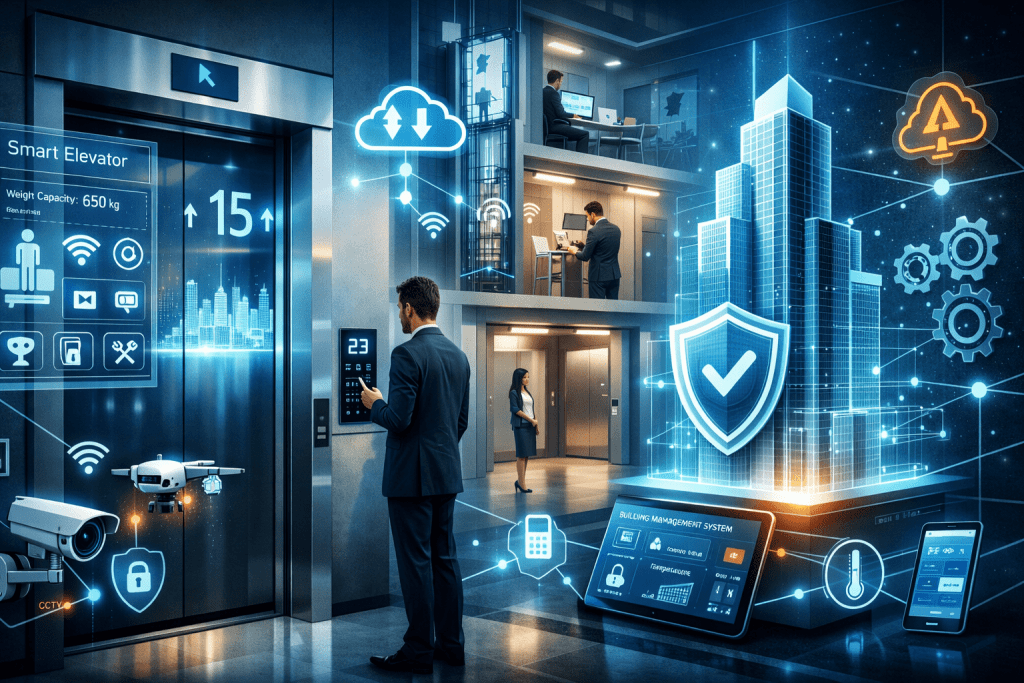
Smart elevators powered by the Internet of Things (IoT) represent the next generation of vertical transportation systems. By leveraging data, sensors, and smart connectivity, they significantly enhance safety, efficiency, and building management.
This article explains what smart elevators are, how IoT works within them, and their impact on safety and building operations.
What Is a Smart Elevator?
A smart elevator is a system that uses digital technologies, data analytics, and connectivity to optimize performance. These elevators analyze user behavior, traffic patterns, and component conditions to make intelligent, real-time decisions.
The Internet of Things (IoT) plays a key role in transforming traditional elevators into smart systems.
The Role of IoT in Smart Elevators
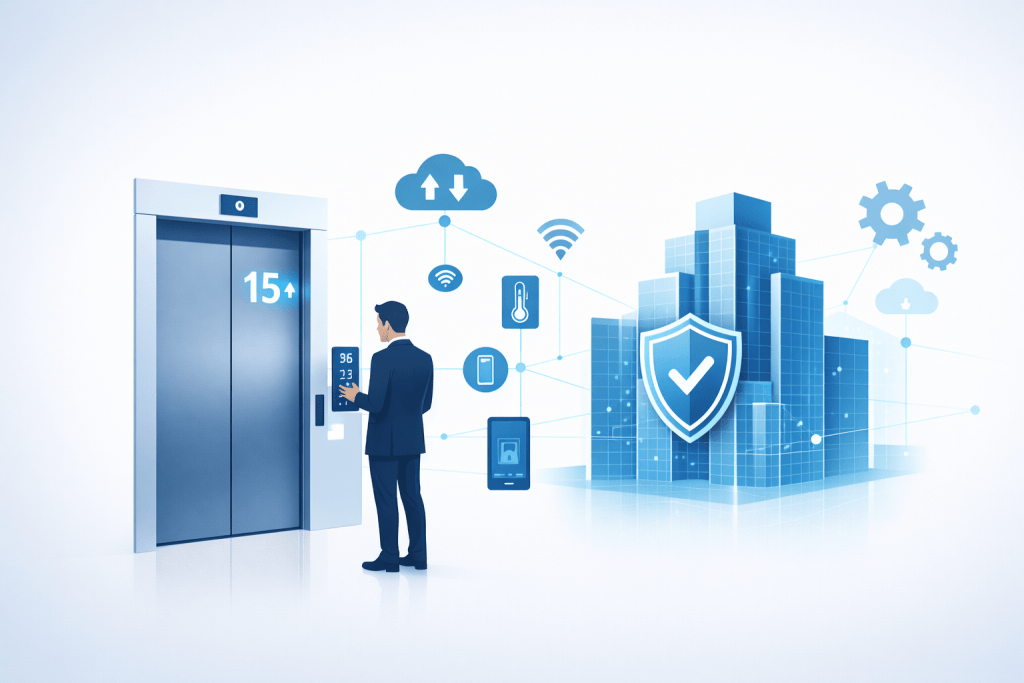
IoT refers to connecting physical devices to the internet to exchange data. In smart elevators, sensors and IoT modules continuously collect and transmit information.
Key IoT applications in elevators include:
Real-time system monitoring
Predictive maintenance
Smart alerts and notifications
Remote control and diagnostics
Performance data analysis
Benefits of IoT-Based Smart Elevators
Enhanced user safety
Reduced unexpected breakdowns
Lower maintenance costs
Improved traffic management
Extended equipment lifespan
Better user experience
Energy Efficiency in Smart Elevators
Smart systems help:
Automatically shut down during low-traffic periods
Optimize motor and braking systems
Reduce overall energy consumption
Intelligent Traffic Management
By analyzing usage patterns, smart elevators reduce waiting times, optimize energy consumption, and coordinate elevator movement efficiently—especially in high-traffic buildings.
Impact on Building Safety
Smart monitoring systems detect issues such as abnormal vibration or temperature increases instantly, allowing maintenance teams to respond before serious incidents occur.
Suitable Buildings for Smart Elevators
Residential and office towers
Shopping malls
Hotels
Hospitals
Smart buildings
Challenges and Limitations
Higher initial investment
Need for robust IT infrastructure
Dependence on stable internet connectivity
Requirement for skilled technical support
The Future of Smart Elevators
The integration of AI, IoT, and data analytics will continue to shape safer, more efficient elevator systems.
Conclusion
IoT-based smart elevators are transforming modern buildings by improving safety, efficiency, and user experience. Investing in smart elevator technology is a forward-thinking decision for sustainable building development.